



On This Week: Irish moments from history (July 13th - 19th)
Welcome to On This Week, where we delve into the standout stories from the years gone by, featuring standout news stories, major sporting events, and pop culture highlights that helped shape Irish life. Here's your dose of Irish history from July 13th - 19th.
This week in Irish life and news
1959: Ireland's first female Gardaí
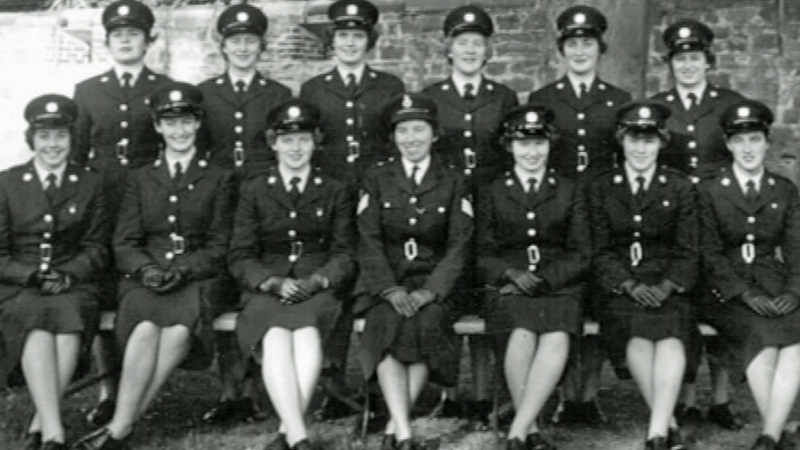
On this week 67 years ago, the first female recruits to join an Garda Síochána were preparing to take up duty later that year. Twelve female recruits were undergoing training with an Garda Síochána to become the first women to join the force. The women were from around the country, with recruits from Donegal, Kildare, Cavan, Galway, Longford, Leitrim, Roscommon, Sligo, Limerick and Dublin represented in the class.
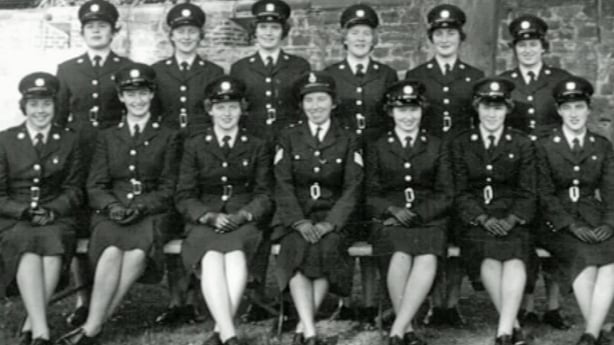
Superintendent Walter Dunne, Assistant Training Officer, emphasised the need for female Gardaí.
This is the most important event that has occurred in the force since its establishment
One of the new trainees, Mary Margaret Theresa Browne from Castlerea, County Roscommon, talked to RTÉ about applying for the job and her training with An Garda Síochána. She had a long desire to work in policing and applied immediately after hearing about the roles advertised on Radio Éireann and in newspapers. Recognising that the new recruits will likely be the object of some attention once they begin active duty, Browne said,
We shan't feel embarrassed.
Sergeant Doreen Prissick of the Liverpool Police was seconded at the request of the Garda Síochana to train the first group of women in Ireland. Sergeant Prissick was a native of Hull who joined the Liverpool Police in 1948 and became a Sergeant in 1955.
She offered her advice to the people of Dublin in their dealings with the new women Gardaí and hoped that people understand that the new recruits are there to help people and are not just on the streets to arrest.
The new Gardaí were scheduled to take up duty after their passing out ceremony in December 1959. All the recruits would then be assigned to College Street Station, Dublin, for practical training with the Dublin metropolitan division.
Fifty years later, Margaret Browne and some of her colleagues spoke to RTÉ again about their experiences.
This episode of 'City Newsreel' was broadcast on 13 July 1959. The reporter is John Ross. This recording is from the RTÉ Archives Acetate Disc Collection which has been digitised with the support of the Broadcasting Authority of Ireland (BAI) Archiving Scheme.
1972: Belfast families evacute their homes in protest
On this week in 1972, residents of the Lenadoon Estate in Belfast left their homes in protest at the presence of British soldiers in the estate. Father Jack Fitzsimons called a public meeting of the residents of the Lenadoon Estate and presented the British army with an ultimatum. He requested that the British soldiers leave the estate by 2.00 pm on Sunday 15 July. If not, the entire population would evacuate their homes. By 4.00 pm on Sunday afternoon, a mass evacuation of Lenadoon Estate was underway in protest at the presence of the British army.
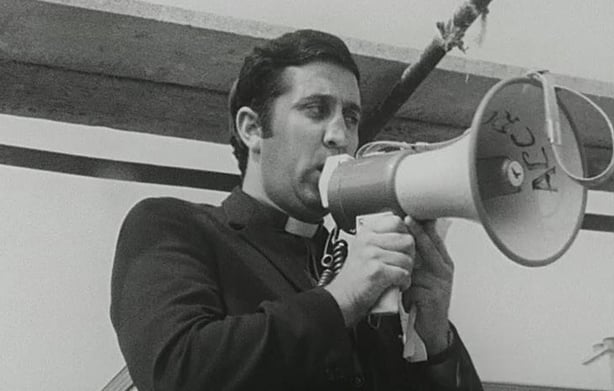
Addressing the residents, Fr Fitzsimons said,
This evacuation must be freely done. There is to be no coercion and the evacuation is to be organised by the people of this area. It has no connection whatsoever with any republican party present in this area. It is you people who are making this decision. It is you people who are standing up for the right to live in your own homes.
As residents departed from the Lenadoon Estate some of them told RTÉ News their reasons for leaving. One woman with a young family said that all she wanted is peace.
I'm prepared to stay away as long as I'm assured of peace.
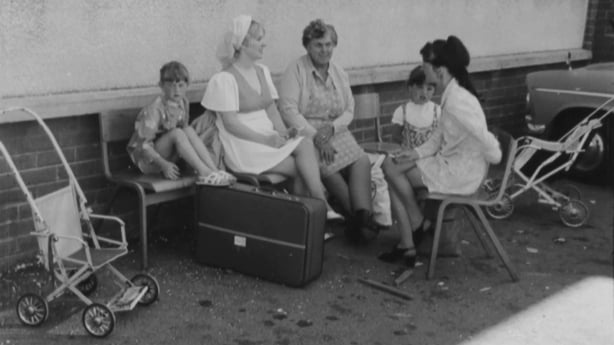
Another man said that it had been a terrible mistake to allow the army to take over people's houses. He was prepared to stay away from his home as long as is necessary.
An RTÉ News report broadcast on 16 July 1972. The reporter is John McAleese.
This week in arts and entertainment
1978: Playing the pipes at the Willie Clancy Summer School
On this week in 1978, at the Willie Clancy Summer School in Miltown Malbay, County Clare, foreign students of Irish music learned to play the uilleann pipes, which proves to be no easy feat. Some of the participants in the summer school talk about their experiences of the event.
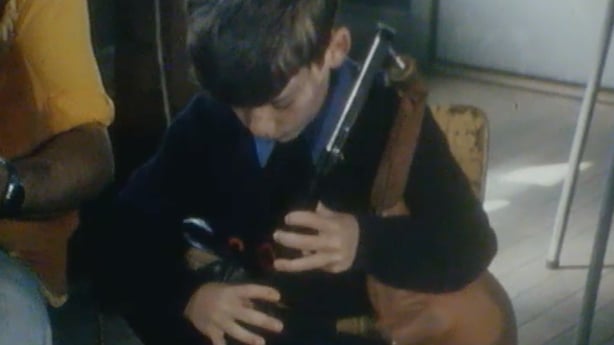
Scoil Samhraidh Willie Clancy, which began in 1973, is a week-long summer school in traditional music and set dance held each year in Miltown Malbay. The summer school commemorates Miltown Malbay's best-known uilleann piper, Willie Clancy (1918-1973). The school provided music and dance classes, workshops, lectures and recitals. This episode of PM was broadcast on 13 July 1978.
The Willie Clancy Summer School is still going strong and this year's event took place last week.
1986: Bolshoi Ballet insists its dancers have their freedom
Claims of strict security surrounding the Russian Bolshoi Ballet company on their visit to Ireland from the Soviet Union were dismissed as nonsense during a photo-call for their upcoming Royal Dublin Society (RDS) shows on this week forty years ago.The 150 strong company planned to perform a series of four shows on a purpose built stage costing £400,000 at the RDS in Dublin.
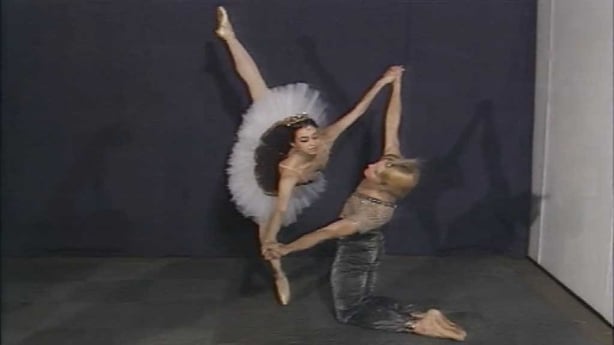
Irish audiences would see excerpts from popular ballets including 'Sleeping Beauty', ‘Coppelia’, ‘The Nutcracker’ and ‘Swan Lake’. Excerpts from ‘The Golden Age’ will also be performed in the West for the first time.
The company included American Grand Prix winners Nina Ananiashvili and Andris Liepa. At just 23 years old, Nina fully accepted the discipline ballet demands. Speaking through an interpreter she explained,
When you love something you don’t resent the sacrifice. We devote all our whole lives to ballet.
A spokesperson for the Bolshoi quelled the rumours about the dancers being placed under tight security.
They travel as individuals, we don’t coach them, we don’t bus them, they go shopping, they do what they want to do.
An RTÉ News report by Mary Fanning broadcast on 16 July 1986.
This week in sports
1986: Dún Laoghaire Grand Prix
The streets of Dún Laoghaire become a motor racing track on this week forty years ago, and the highlight of the day's racing in Dun Laoghaire was the Formula Ford 2000 Zanussi Grand Prix The event was organised by the Leinster Motor Club. Cars reached top speeds of up to 140 miles per hour along a course that weaved through the narrow streets of Dun Laoghaire. Ivan Thompson from Terenure in Dublin was the winner of the main event and it was suggested that
Dun Laoghaire could well be host to its own regular style Monte Carlo Grand Prix.
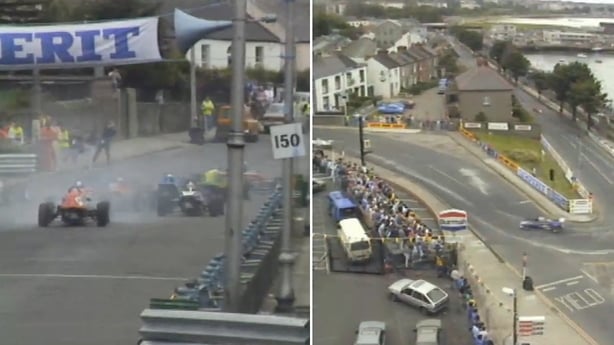
While this was the first time motor racing has been seen on the streets of Dun Laoghaire, street racing is nothing new in Ireland. The first round the houses races were staged in Bray, County Wicklow in 1934 followed by meetings in both Cork and Limerick.
An RTÉ News report broadcast on 19 July 1986. The reporter is Charlie Bird.
1987: Senior Leinster Hurling final postponed after U2 concert
On this week in 1987, Kilkenny and Offaly were rocked by the decision to posptone the Leinster Senior Hurling final due to the condition of pitch after a huge U2 concert. The final between Kilkenny and Offaly was due to be played in Cork Park but has to be postponed due to the poor quality of the pitch following the U2 concert on 27 June 1987. Damage to the playing surface had not repaired in time and future concerts at the stadium were now under threat.
GAA Financial Controller Ciaran O'Neill acknowledged that the GAA may have been a bit over ambitious holding the two events so close together. He also claimed that while the GAA was perceived as a wealthy organisation, this wealth was confined to property. Holding concerts at Croke Park and other stadiums around the country enabled the GAA to get a much-needed injection of cash. This latest financial return came at a high price with the cancellation of the eagerly awaited Leinster Hurling Final leaving players and supporters disappointed.
An RTÉ News report broadcast on 14 July 1987. The reporter is Áine Lawlor.
What was Number 1 in Ireland this week?
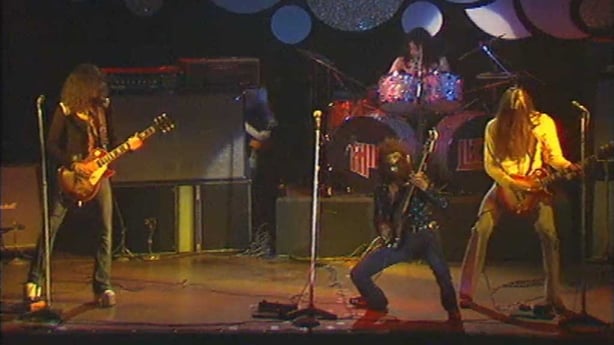
1976: 'The Boys Are Back in Town' by Thin Lizzy
One of Phil Lynott's most iconic songs topped the charts fifty years ago for three weeks.
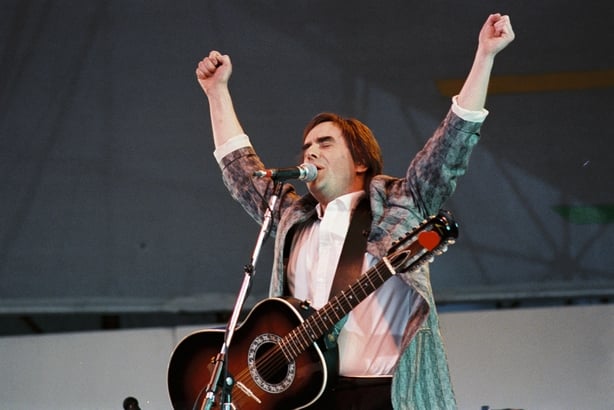
1986: 'The Lady in Red' by Chris de Burgh
Chris de Burgh's biggest international hit was massive all over the world, and especially here in Ireland, staying at number one for seven weeks forty years ago.
1993: 'What's Up?' by 4 Non Blondes
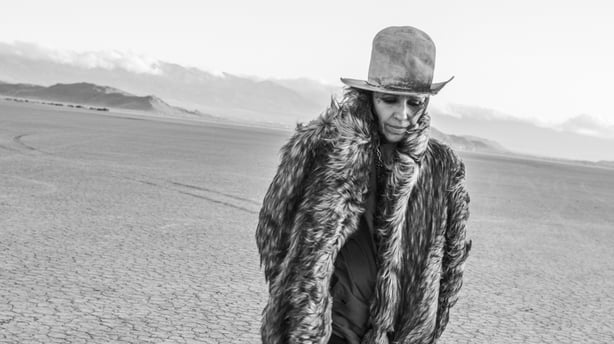
'What's Up?' was the 4 Non Blondes' biggest hit, staying at number one in Ireland for five weeks.Frontwoman Linda Perry went on to become an even more successful songwriter for everyone from Christina Aguilera to Gwen Stefani.
Famous Irish names celebrating birthdays this week
Kristen Sheridan
The writer and director turns 50 on July 14th.
Danny Healy-Rae
The Kerry TD celebrates his 72nd birthday on July 16th.
Annie Mac
The Irish DJ and broadcaster turns 48 on July 17th.
