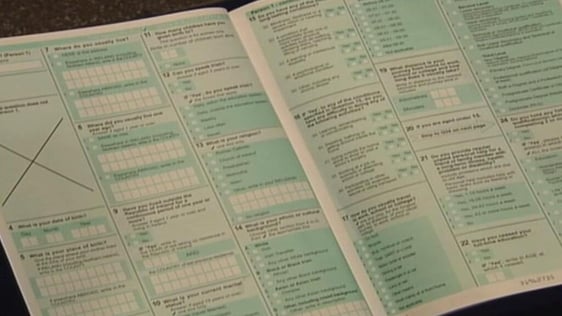
What can census results tell us about the changes in the population of Ireland?
A preliminary report of the 1971 Census held on 18 April shows that the population of the Republic of Ireland is about the same as it was in 1926, when the first census was taken in the new state. Apart from 1951, the population dropped steadily until the 1960s, when it started to rise again. In the decade 1961-71, the county's population went up by 142,000.
Equivalent in fact to a little over the population of Cork city.
However, the population growth is lopsided. Practically all of the growth is in Leinster, with Munster coming next, particularly in the Cork region.
Leinster now has more than half the country's population.
In Connacht, the population fell by three per cent.
It doesn't sound much but it's worth remembering that these counties may be more or less depleted of those age groups that emigrated in years gone by.
In the three counties in Ulster, Cavan, Monaghan and Donegal, the decline was almost halted.
Outside of the tourist season parts of the country are virtually empty.
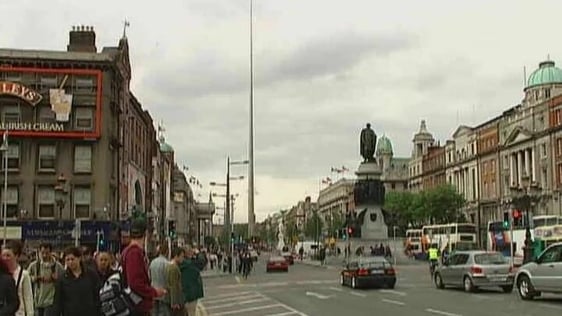
By contrast, Dublin is a special case. Although the city population fell slightly, this is because the population has spread into the surrounding countryside
New suburbs have mushroomed creating a huge urban region of town and county.
The Dublin area alone now houses 850,000 people or roughly three in every ten people in the country
The implication for national planning is frightening.
The report shows that cities are growing rapidly but the survival of some of the rural communities, particularly in the west is open to question. Leitrim is the only county with a higher birth rate than death rate.
An RTÉ News report broadcast on 22 September 1971.