



Putting something you’ve created out into the world inevitably comes with a degree of vulnerability.
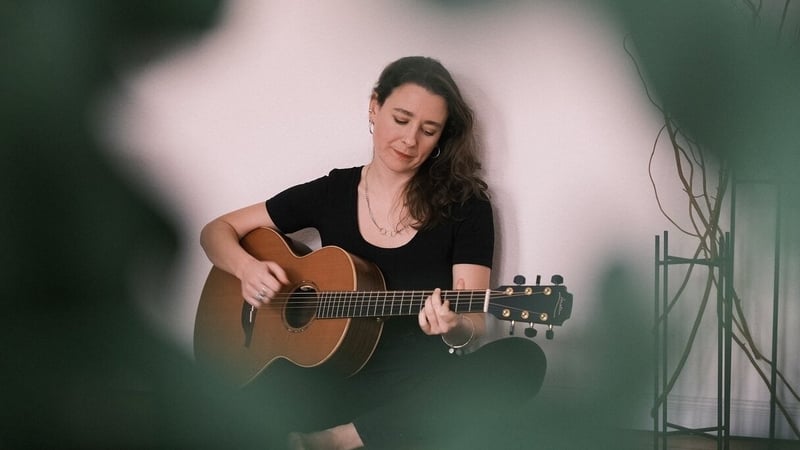
Anyone who has ever made something and watched it leave their hands will recognise the feeling behind Irish musician Síomha’s latest post on Substack, titled ‘Goodbye social media. Goodbye music industry’. In it, the County Clare native eloquently explained to her fans and readers that she had made a decision to take control over her music and how the industry’s narrow parameters - particularly for independent musicians - had forced her to participate in a game that she was no longer interested in playing.
"It’s the whole ecosystem around the music, and the constant feeling that making the work itself is never enough," she wrote. "You have to get people to hear it, get people to talk about it, get people to follow you, get people to come to your shows, and then somehow keep them engaged so you can keep doing it. This whole cycle is hard, even when you have a big team within the machine working it for you. Imagine how hard it is when, as a small independent artist with literally no resources, you are expected to do all that work too?"
Síomha, who released her excellent debut album Infinite Space last year, revealed that she had been gradually stepping back from the industry, spending less time on social media and had even removed her music from Spotify last year. She was, she said, tired of her output "being shaped by the algorithm" - although she intends to keep making music on her own terms, which are still being defined.
It’s perhaps a gut-churningly difficult decision for some, but a hugely admirable one. Here is a musician who wants to make art for the right reasons; not for fame and fortune, but because it’s a way of expressing herself and channelling her lived experience in the hope that it will resonate with other people. Unfortunately, as Síomha has learned, the industry is not always interested in ‘the right reasons’.

Síomha is not the first artist to make the drastic decision to step back from the profit-driven machinations of the music industry, nor will she be the last. It is interesting, however, to look back at other acts who have taken a different route to sharing their music with people, or willingly pulled the brakes on their career entirely. In recent years, the highest-profile example is Lewis Capaldi; at the height of his fame in 2023, the Scottish pop star announced he was taking a break from touring "for the foreseeable future" to focus on his mental health. He has since returned and picked up where he left off with no ill effect - but the Somebody You Loved singer is certainly no struggling independent artist.
The truth is that those being nudged out of the industry are the ones without a major label, a PR team or a financial buffer that allows them to take time out and figure out their next step
Similarly, Adele has taken extended breaks from the music biz, while R.E.M. guitarist Peter Buck once said that when the band broke up, he compiled a list of things he hated about the industry that was "five pages long". It included "the money, the politics, having to meet new people 24 hours a day, not being in charge of my own decisions", he told Rolling Stone in an interview. Buck has since played with many other bands and friends, but apparently now on his own terms.
Ed Droste of the Brooklyn indie band Grizzly Bear, meanwhile, left the band in 2020 to become a therapist, citing burnout as a driving factor. Droste previously opined about the monetary perils that come with being in a band even at Grizzly Bear’s internationally successful level. In 2018, he shared his thoughts with a warning message to fans that echo Síomha’s recent sentiment: "The evolution of the music industry is in my opinion destroying bands that play music that are mid tier or lower," he wrote. "Nobody cherishes or puts any value into the craft that goes into songwriting, or studying music! Yes pop stars write hits. Yay! They also get branding deals, and corp gigs... but when you are dealing with a dying industry and you actually care about a real live show and you aren't a star, there's not much you can do."

It would be nice if every musician wielded the same power and authority as Capaldi, Adele et al, but the truth is that those being nudged out of the industry are the ones without a major label, a PR team or a financial buffer that allows them to take time out and figure out their next step - and whether they even want to continue. Many others simply aren’t afforded that choice. The Basic Income for the Arts scheme here in Ireland is undoubtedly a step in the right direction to providing support, but are independent musicians fighting a losing battle to begin with? And does the route that the industry is headed mean that talented artists that don’t fit the Top 40 chart mold will now be resigned to making music as a hobby, rather than being able to make a living from it?
There is much to admire when an artist takes matters into their own hands and says ‘This isn’t working for me anymore’ - but the truth is that for every person like Síomha who voices their reasons, there might be ten others who simply pack it in quietly. The real loss, then, is not just the artists who leave the stage, but the songs we will never hear and the voices we will never know we were missing to begin with.
For now, at least, Síomha is still writing songs and will continue making her music available to people - perhaps even for free. "I don’t have the answer yet, but I do believe in making art," she wrote. "I believe in its power and its ability to connect us. I believe I should continue to make art. And I believe there is another way." Whatever that way looks like, let’s hope it allows artists to keep making the work they believe in - and to feel that it is sufficiently valued, too.
Lauren Murphy is the co-host of the pop culture podcast Get Around To It
The views expressed here are those of the author and do not represent or reflect the views of RTÉ
