


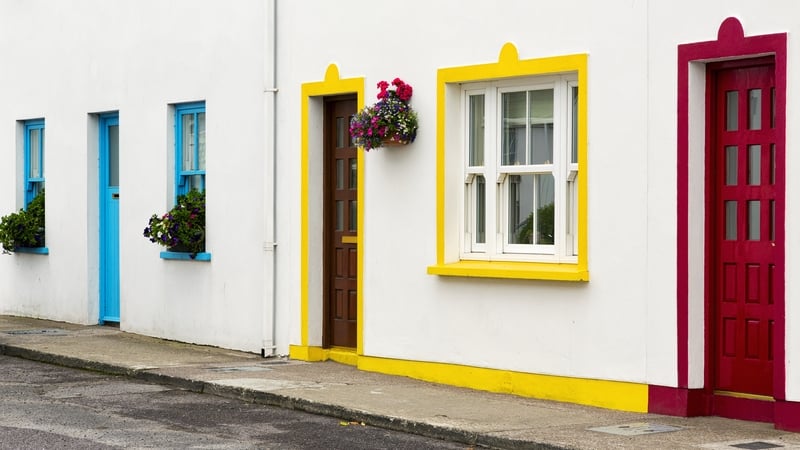

Analysis: The buildings around us can have been influenced by tax avoidance as generations of property owners adapted their homes in reaction to the system
By Elaine Doyle and Brendan McCarthy, UL
From the size of the bricks used for building to houses squeezed into impossibly narrow plots, architecture has often been shaped by taxation just as much as by creativity and taste. As we approach the next annual budget, let's look back at some historic taxes that have left visible legacies on the architecture we see around us.
A window tax was introduced in Ireland in 1799, levied on the number of windows in a dwelling house. It was payable by the occupier of the house and applied to every inhabited dwelling-house in Ireland. All windows in occupied houses were subject to the tax including skylights, staircase lights, garret and passage lights. The legislation provided an exemption for 'any window occupied with or used for a loom which shall be standing at such window, and be really used for weaving’, the wording clearly anticipating attempts to avoid the tax by placing a loom in every window.
While the window tax is commonly blamed for the existence of blind windows in Georgian buildings in England, there is little evidence that windows were bricked up to avoid the tax in Ireland. In fact, the tax was levied on windows that existed in the house on 1 January 1799, predating the implementation of the tax and preventing occupiers from avoiding the tax by blocking up the windows after the tax was introduced.
We need your consent to load this rte-player contentWe use rte-player to manage extra content that can set cookies on your device and collect data about your activity. Please review their details and accept them to load the content.Manage Preferences
From RTÉ Radio 1's Drivetime, calls for new construction methods for housing
It is more likely that the number of windows in houses built after the introduction of the tax were carefully planned to reduce the liability. The window tax was accused of levying ‘a tax upon daylight’ which is said to have resulted in the phrase ‘daylight robbery’, though this is contested.
The British brick tax was introduced in 1784 to help pay for the war with colonial America and was extended to Ireland in 1826. It was levied on the number of bricks in a building. The tax resulted in brick manufacturers making larger bricks to reduce the tax burden as the tax was levied on each brick regardless of size. The British government responded by legally limiting the maximum size of a brick. However, houses built in Ireland and Britian in the late 18th and early 19th centuries with larger bricks or with alternative materials like stone masonry are reminders of a tax that has been long repealed. Indeed, brick size is still used as an effective archaeological dating tool.
The hearth tax in Britain was levied on the number of fireplaces in a property. The tax necessitated tax accessors (called chimney men) entering homes to determine the number of fireplaces, a practice thoroughly despised by householders. A common means of avoiding the tax was boarding up or blocking chimneys to prevent them being counted as functional hearths. The tax was extended to Ireland in 1793 with the result that many Irish homes were built without chimneys thereafter to avoid the tax.
In reacting to taxes and attempting to reduce their tax burden, however, taxpayers may behave in unexpected ways.
Extremely narrow buildings are a unique characteristic of the architecture in Amsterdam still visible today. The expansion of the city in the early 17th century, during its Golden Age, meant space was at a premium especially along the canals. The city reacted by imposing a frontage tax on the width of the houses. To reduce the tax burden houses were kept extremely narrow while their height and depth was maximised to provide enough living space behind the frontage of the property.
Large windows were needed to maximise the light and staircases had to be steep and spiral to fit within the narrow width of the houses. Crane and pulley systems had to be designed to facilitate moving items in and out of the houses through the large windows. Hoisting beams and hooks at the top of the gables are still a visible feature of canal houses today.
The primary goal of taxation is to raise revenue. In reacting to taxes and attempting to reduce their tax burden, however, taxpayers may behave in unexpected ways. We can see evidence of this in the buildings around us, some elements of which have been influenced by tax avoidance as generations of property owners adapted their homes in reaction to the demands of the tax system.
Follow RTÉ Brainstorm on WhatsApp and Instagram for more stories and updates
Elaine Doyle is a professor in the Department of Accounting & Finance at University of Limerick. Brendan McCarthy is an associate professor in the Department of Accounting & Finance at University of Limerick.
The views expressed here are those of the author and do not represent or reflect the views of RTÉ
