


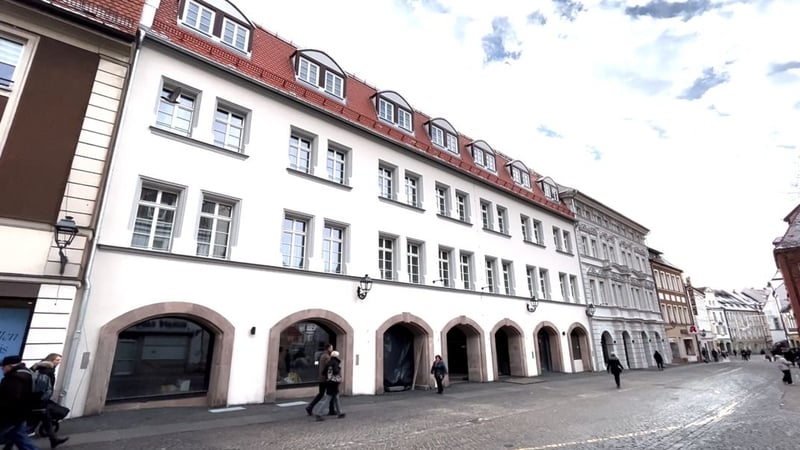
Vacant offices, shops, and restaurants can be found all over Bavaria. A new initiative from the Ministry of Construction aims to combat vacancy and accelerate the conversion into apartments.
Housing is scarce and expensive in many places. At the same time, offices, shops, and commercial properties stand vacant in the middle of Bavarian cities and communities. The Bavarian Ministry of Construction wants to tackle both problems together: The "Leerstand jetzt WOHNEN" ("Make vacant apartments available") project aims to convert unused buildings into affordable rental housing and revitalize town centers.
Converting offices into apartments - An example in Munich shows how this can be done (In German)
Make use of existing buildings instead of constantly developing new construction areas
Minister of Construction Christian Bernreiter (CSU) sees vacant properties as an underutilized potential. "We want to see life brought back to the city centers," he says. It's about not always sealing new plots of land and expanding residential areas outward. At the same time, the problem of vacancy must be solved.
The model project is aimed at cities and communities that own vacant commercial, office, or retail spaces and want to create affordable apartments from them. This links housing promotion and urban development funding. The municipalities receive not only financial support but also advice on planning, approval, and implementation. The experiences from the first projects will then be transferred to other communities.
Eight new apartments in an old town hall
One of the five pilot communities is Reischach in the Upper Bavarian district of Altötting. In the town of about 2,800 inhabitants, there are many large single-family houses, but few small and affordable apartments. This makes it especially difficult for young adults to remain in the community after moving out of their parents' home. "We have too little living space, especially affordable living space," says Mayor Alfred Stockner. Once a young person moves away, they often do not return. This affects not only the community but also clubs and the social life in the town.
Therefore, the old town hall, which has been vacant since the administration moved, is to be converted. The building will house eight apartments for young people. Together with architect Michael Leidl, the community is looking for solutions that largely preserve the existing structure while still meeting today's requirements.
The conversion is challenging. The town hall was built in the 1950s when construction materials were scarce and used sparingly. Additionally, the building has had different functions and occupants throughout its history - from administration to post office to fire department. Now it must be adapted to the requirements of residential use.
Lower standards reduce conversion costs
An essential help is the adapted structural specifications. Under regular housing promotion, the building would need to be made fully accessible. In the context of the model project, it is sufficient to make the apartments on the ground floor barrier-free.
Such simplifications are intended to prevent the conversion from failing due to standards that would require disproportionately high effort to implement in the existing building. Safety requirements are not eliminated. Rather, it should be examined which specifications are necessary and appropriate for the specific building.
The funding also significantly relieves Reischach. The conversion costs a total of around 2.6 million euros. Nevertheless, it is cheaper than a demolition followed by new construction, says Mayor Alfred Stockner. Thanks to the funding, the municipality states it only has to bear about 750,000 euros itself. This is intended to keep later rents affordable.
Future residents are planning apartments together
The young people from Reischach were involved in the planning early on. For example, they could help decide how common areas should be used and whether washing facilities should be in the apartments or in a shared basement. Many of them can envision moving into the old town hall themselves later. For them, the project connects affordable housing with the possibility of staying in their familiar community.
"Vacancy Now Living" started with five pilot projects and around 50 planned apartments. According to ministry reports, there are now 20 concrete projects. By mid-2028, the program is set to grow to 50 projects with a total of about 500 apartments.
In Reischach, the conversion is expected to be completed by the end of next year, and the first tenants will move in. Other municipalities are showing interest: First mayors have already inquired with Alfred Stockner about his experiences. The old town hall could thus become a model beyond Reischach.
An article written by Isabella Kroth (BR), initially published on 1 October 2026, 04:56 (CEST)
