


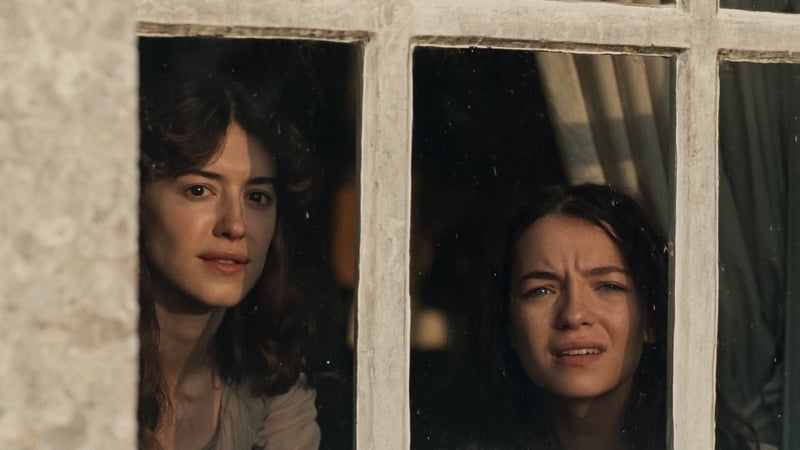

Director Georgia Oakley finds something fresh in a story we think we know almost too well.
Rather than treating Austen too preciously, she leans into the discomfort beneath the romance, the money and the narrow choices available to women, giving the film a less idealised feel.
After their father’s death, Elinor (Daisy Edgar-Jones) keeps a tight lid on her feelings while Marianne (Esmé Creed-Miles) lives at the opposite extreme. Their romances with Edward Ferrars (George MacKay) and John Willoughby (Frank Dillane) drive the plot, but Oakley keeps returning to the bond between the sisters.
It is an approach Edgar-Jones clearly connected with.
"I think the true love story is between the women and the sisters and the Dashwood family, definitely," she told RTÉ Entertainment.
Watch: Sense and Sensibility stars Daisy Edgar-Jones and Caitríona Balfe chat to RTÉ Entertainment
Edgar-Jones is superb at making silence feel busy. Elinor is forever swallowing a thought, a disappointment or a confession, and the performance becomes more interesting the less she appears to do.
Creed-Miles gets a very different brief and embraces it. Her Marianne is impulsive, emotionally exposed and sometimes almost overwhelming in her intensity.
Oakley gets plenty of mileage from the characters orbiting the sisters, too.
Caitríona Balfe gives Mrs Dashwood a grounded, practical presence, holding everyone together without making a show of it.
Bodhi Rae Breathnach brings a cheeky spark to Margaret, allowing the youngest Dashwood feel like a character in her own right rather than just an observer.
Fiona Shaw, meanwhile, is exactly the sort of presence the film needs as Mrs Jennings. She breezes in with gossip and mischief, but Shaw also understands the intelligence beneath the comedy, reminding us just how sharply funny Austen could be.
Visually, the film resists making the period setting too pristine.
Cinematographer Arnaud Potier gives the landscape a rougher edge, with wind, mud and unruly greenery pressing against all those carefully managed manners.
Some of Oakley’s bolder choices are less successful.
The choreographed dance sequences are so deliberately stylised that you can see the construction of the scene before you feel its emotional purpose.
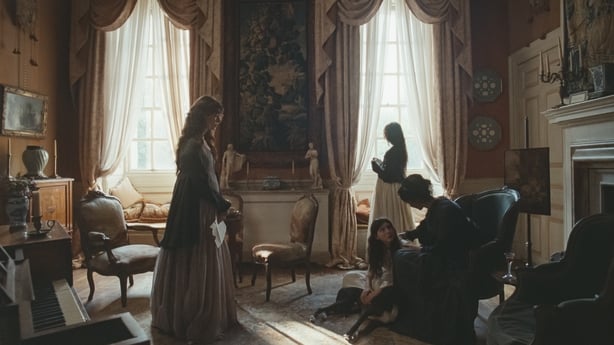
At more than two hours, there are moments when the film stays with an idea longer than it needs to.
Still, Sense and Sensibility succeeds because it understands that Austen's love stories were never only about romance. Beneath the longing and misunderstandings are questions of money, security, reputation and the limited choices available to women.
Austen purists can breathe easy.


