


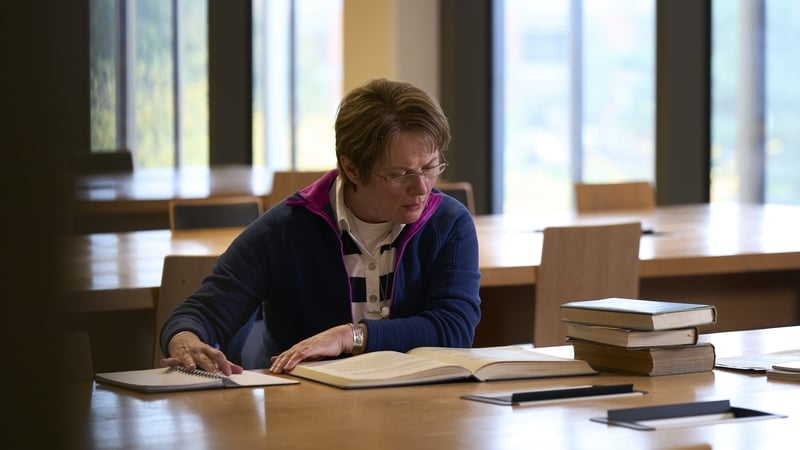

Monica Dolan is superb in Frank Berry's gripping and moving account of how Catherine Corless exposed the horrific history of the Bon Secours mother and baby home in Tuam
You will be hard pressed to find a better performance this year than Monica Dolan as Catherine Corless in this quietly powerful story of how one woman singlehandedly exposed one of the greatest scandals in Irish Catholic Church history.
Corless is, of course, the Tuam woman and amateur historian who began investigating the mother and baby home in her hometown, leading to too many unanswered questions about hundreds of young lives erased from official records and local memory.
Based on Dan Barry’s 2017 New York Times article and produced by Liam Neeson, the film is a forensic account of one woman's tireless work but it also gracefully examines Corless's internal and domestic life as she struggles to bring some kind of dignity and remembrance to the many victims. They are recalled by locals as "the known but unnamed" or "the wet the beds", said to have been "born on the other side of the blanket."
Corless began looking into the home in 2010 as part of an essay for her local history class but as she picks away at the story, terrible details begin to emerge. Death records from the home are curiously incomplete, there is talk of human remains at the site after it was demolished to make way for a housing estate. Hardly believing what she is uncovering, she realises that there are no death certificates for nearly 800 children who were born or lived at the home and no official records of where they were buried.
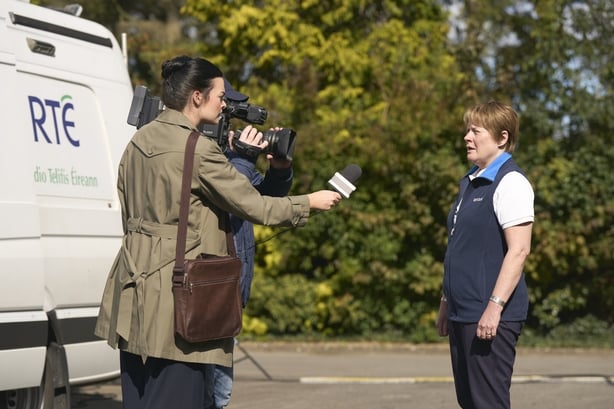
As her horror mounts, her tenacity grows and her commitment leads to tensions at home with her husband Aidan (an excellent as ever Andrew Bennett). He fears she is exhausting herself and that it will lead to another episode of the depression she had battled in the past. Corless has her own ghosts to contend with and she is still haunted and deeply hurt by how her mother was treated as an outcast due to the fact that she was illegitimate. As the story goes global, Corless also realises she must overcome her natural shyness and reserve.
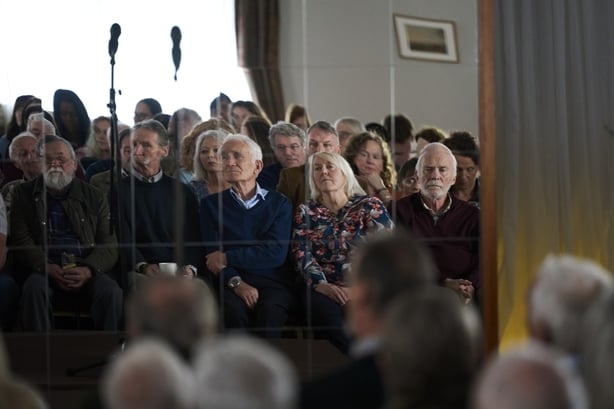
Rebecca Lenkiewicz screenplay and dialogue has the ring of authenticity and Frank Berry’s trademark naturalistic camera work is observational and reserved. It unfolds with the same unobtrusive, observational style of his previous films Michael Inside and Aisha. But his film also has the quickening pulse of a procedural detective thriller or a story of a dogged reporter burning shoe leather to ferret out the truth. Stonewalled by the religious orders and state officialdom, Corless trails from the HSE to local health authorities to record offices where documents start slowly to yield dark secrets.
There is a slow drip, drip of revelation and discovery that lends everything a hypnotic quality. It is all done with tremendous grace and dignity. This is magnificent small scale filmmaking that leaves a profound impact.


